Pregnancy and childbirth create significant changes throughout the body. As a baby grows, the abdominal muscles, hips, back, posture, breathing patterns, and pelvic floor must continually adjust.
Some discomfort and physical changes are expected. However, ongoing pelvic pain, bladder leakage, pressure, weakness, or difficulty returning to regular activities should not simply be accepted as an unavoidable part of pregnancy or motherhood.
Pelvic floor rehab can help address these concerns before and after childbirth. This specialized form of physical therapy focuses on improving the way the pelvic floor, core, hips, back, and breathing muscles work together.
At Evolve Physical Therapy in Baton Rouge, prenatal and postpartum pelvic floor therapy is provided by Camille Manning, PT, DPT. Camille works with expecting and new mothers to reduce discomfort, restore function, and help them move through pregnancy and postpartum recovery with greater confidence.
What Is Prenatal and Postpartum Pelvic Floor Rehab?
Prenatal and postpartum pelvic floor rehab is a specialized type of physical therapy designed for people who are pregnant, preparing for childbirth, or recovering after delivery.
Pregnancy and childbirth can place extra stress on the pelvic floor, requiring the body to adapt to new physical demands and recover after delivery. Pelvic floor rehab helps identify areas that need improvement, whether building strength, reducing tension, improving mobility, or restoring coordination with the rest of the body.
How Can Pelvic Floor Therapy Help During Pregnancy?
Pelvic floor therapy during pregnancy helps the body adjust to physical changes by addressing pain, pressure, weakness, and movement limitations that may arise as weight distribution and posture shift.
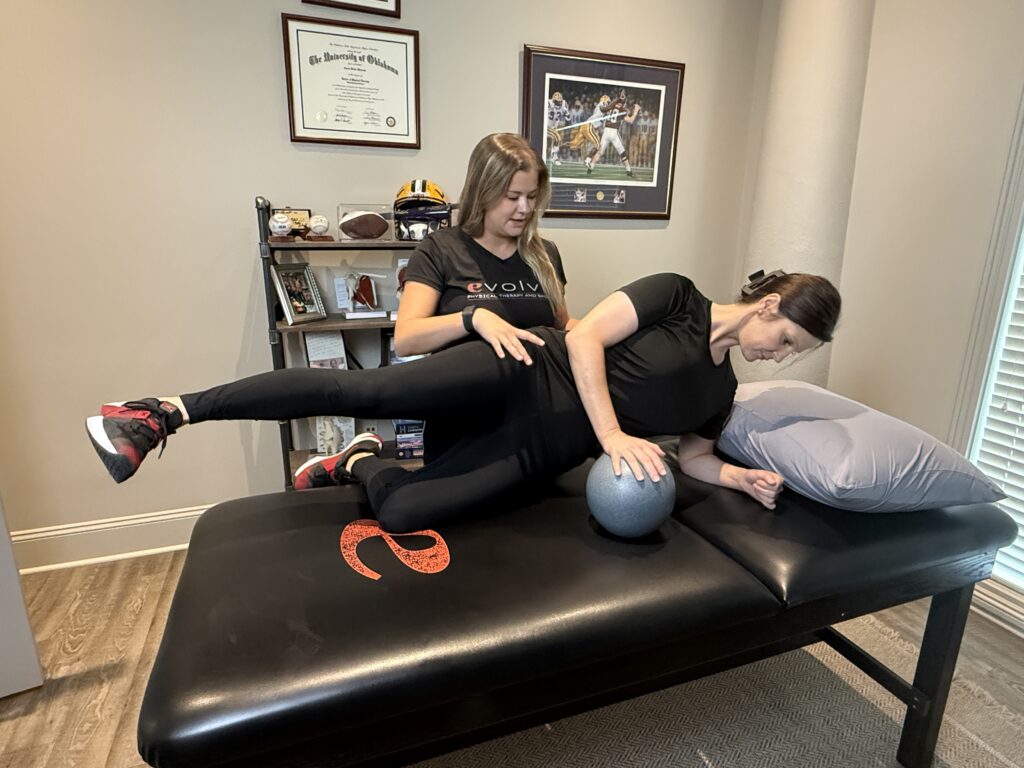
Treatment may include gentle strengthening, mobility exercises, hands-on therapy, breathing techniques, postural education, and guidance for safe, comfortable activity. The primary goal is to help the body adapt effectively so patients remain active and comfortable throughout pregnancy.
What Pregnancy Symptoms Can a Pelvic Floor Specialist Address?
Prenatal pelvic floor therapy may help when you are experiencing:
- Pelvic, hip, groin, tailbone, or lower-back pain
- Bladder leakage or increased urgency
- Pelvic pressure or heaviness
- Constipation
- Pain during intimacy
- Core weakness or instability
- Pain when walking, climbing stairs, or changing positions
- Difficulty exercising comfortably
- Concerns about maintaining strength and mobility during pregnancy
A pelvic floor specialist should consider the full picture rather than treating each symptom in isolation. For example, pelvic pressure may be influenced by breathing mechanics, posture, muscle tension, or how the abdominal muscles manage pressure during movement.
Addressing these contributing factors can make daily activities more manageable and may prevent symptoms from becoming increasingly limiting.
Can Pelvic Floor Rehab Help Prepare for Labor and Delivery?
Pelvic floor rehab can help patients better understand how their bodies work during labor and delivery.
Prenatal treatment may include breathing techniques, pelvic mobility, positioning, pressure management, and learning how to properly engage and relax the pelvic floor. These strategies can also improve awareness of how the pelvic floor responds during different movements and labor positions.
While pelvic floor therapy cannot guarantee a specific birth experience, it can help patients feel more prepared, informed, and confident as they approach childbirth.
How Can Pelvic Floor Rehab Support Postpartum Recovery?
Postpartum recovery involves more than allowing tissues time to heal. The body must also restore strength, mobility, coordination, and confidence.
After childbirth, many women notice that their core and pelvic floor do not feel or function the way they did before pregnancy. Bladder leakage, pelvic pressure, abdominal weakness, scar discomfort, and difficulty returning to exercise are common concerns.
Pelvic floor rehab focuses on restoring the connection between the pelvic floor, abdominal muscles, breathing system, hips, and back. Treatment may also address posture, scar mobility, lifting mechanics, and the physical demands of caring for a baby. Each plan is tailored to the method of delivery, the body’s healing process, current symptoms, and the patient’s activity goals.
What Postpartum Symptoms Should You Discuss With A Pelvic Floor Specialist?
Some soreness and fatigue are expected after childbirth, but ongoing symptoms should not automatically be considered a new normal.
Physical Therapists can evaluate postpartum concerns such as:
- Bladder or bowel leakage
- Pelvic pain, pressure, or heaviness
- Constipation or difficulty emptying the bowel
- Pain during intimacy
- Abdominal weakness or diastasis recti
- Lower-back, hip, groin, or tailbone pain
- C-section, episiotomy, or perineal scar discomfort
- Difficulty lifting or carrying a baby
- Pain during feeding or childcare positions
- Difficulty returning to running, lifting, or exercise
- A continuing feeling of weakness or instability
Symptoms may begin immediately after delivery or become more noticeable weeks or months later, as activity levels increase.
Pelvic floor rehab may still help even if it has been months or years since childbirth. Patients do not have to be in the early postpartum period to benefit from an evaluation.
Is Pelvic Floor Therapy Helpful After a C-Section?
Pelvic floor therapy can be beneficial after both vaginal and cesarean deliveries.
Even with a C-section, the pelvic floor is affected by the physical demands of pregnancy. It supports the increased weight and pressure of a growing baby while also working with the abdominal muscles, hips, back, and breathing system to maintain stability.
After surgery, some patients may have difficulty reconnecting with their core muscles or may begin moving differently because the incision feels sensitive, tight, or restricted. Over time, these protective movement patterns can contribute to discomfort or weakness in the abdomen, hips, back, or pelvis.
Because every pregnancy, delivery, and recovery is different, your pelvic floor therapist should develop a treatment plan based on the patient’s specific symptoms, healing, and goals rather than using the same exercises for everyone.
Is Pelvic Floor Rehab More Than Kegel Exercises?
Pelvic floor rehab involves much more than Kegel exercises.
Kegels involve contractions of the pelvic floor muscles to strengthen them, but they are not appropriate for every patient or every symptom.
Some patients have weak pelvic floor muscles. Others have muscles that are overly tight, painful, or unable to relax fully. A person may also have enough strength but lack the coordination needed to use the muscles properly during exercise, lifting, coughing, or bowel movements.
Performing more contractions may not improve symptoms when tension or poor coordination is the main problem.
What Happens During a Pelvic Floor Evaluation?
The first appointment begins with a private conversation about the pregnancy, delivery history, symptoms, daily activities, and recovery goals.
You may be asked about pain, pelvic pressure, bladder and bowel function, exercise habits, previous pregnancies, surgeries, and activities that make symptoms better or worse.
Your posture, breathing, core control, hip mobility, back movement, strength, balance, and general movement patterns may all be assessed.
When Can You Begin Pelvic Floor Rehab After Giving Birth?
The right time to begin postpartum pelvic floor rehab depends on the delivery, symptoms, healing, and recommendations from the patient’s healthcare provider.
Some patients may benefit from early guidance on breathing, posture, gentle movement, or pressure management. More advanced strengthening or hands-on treatment may need to wait until healing has progressed and the patient has been cleared for additional activity.
Postpartum recovery is not the same for everyone. The timeline may vary based on the type of delivery, complications, pain levels, scar healing, sleep, activity demands, and other health factors.
How Long Does Prenatal or Postpartum Pelvic Floor Rehab Take?
The length of pelvic floor rehab varies based on the patient’s symptoms and goals.
Someone seeking guidance for mild discomfort during pregnancy may need a different plan than someone experiencing significant postpartum leakage, pain, pressure, scar restrictions, or difficulty returning to exercise.
The timeline can also be influenced by how long the symptoms have been present, the pregnancy and delivery experience, activity level, consistency with recommended exercises, and other medical or musculoskeletal conditions.
Where Can You Find a Pelvic Floor Specialist in Baton Rouge?
Evolve Physical Therapy provides prenatal and postpartum pelvic floor rehab in Baton Rouge with Camille Manning, PT, DPT.
Camille combines her experience in women’s health, movement assessment, manual physical therapy, and performance-based rehabilitation to help expecting and new mothers feel more comfortable and confident in their bodies.
Whether you are managing discomfort during pregnancy, preparing for childbirth, recovering from a vaginal or cesarean delivery, or trying to safely return to exercise, Camille will develop a plan based on your symptoms and goals.
Tags: pelvic floor therapy