Pelvic Floor Physical Therapy
Are Pelvic Floor Issues Affecting Your Daily Life? Physical Therapy May Help
Pelvic floor dysfunction can affect many aspects of daily life, from bladder control and pelvic pain to pregnancy recovery and discomfort during normal activities. These issues are more common than many people realize and can affect both women and men at different stages of life.
The pelvic floor is a group of muscles that supports the bladder, bowel, and reproductive organs. When these muscles become weak, tight, or uncoordinated, symptoms can begin to interfere with everyday comfort and function.
Fortunately, pelvic floor physical therapy can help many people find relief without surgery or medication.
Whether you are dealing with urinary leakage, pelvic pain, postpartum recovery concerns, or discomfort during exercise and movement, physical therapy can help improve muscle function, reduce symptoms, and restore quality of life.
At Evolve Physical Therapy, our Baton Rouge physical therapists are dedicated to helping patients improve pelvic floor function and return to daily activities with greater comfort and confidence. Request your appointment today to get started.
Common Signs and Symptoms of Pelvic Floor Dysfunction
Pelvic floor dysfunction can cause a wide range of symptoms that may gradually worsen over time if left untreated. Some people experience mild discomfort, while others find that symptoms begin interfering with work, exercise, sleep, or daily routines.
Common symptoms associated with pelvic floor dysfunction may include:
- Urinary leakage when coughing, sneezing, laughing, or exercising.
- Frequent urges to urinate.
- Pelvic pain or pressure.
- Pain during or after pregnancy.
- Pain during intimacy.
- Lower back, hip, or tailbone discomfort.
- Constipation or difficulty with bowel movements.
- Core weakness or instability.
- Pain with prolonged sitting or standing.
- Difficulty returning to exercise after childbirth.
Pelvic floor symptoms can develop for many different reasons. The best way to determine the cause of your discomfort is through a thorough evaluation with a physical therapist.
What Causes Pelvic Floor Dysfunction?
Pelvic floor dysfunction occurs when the muscles of the pelvic floor become weakened, tight, strained, or unable to properly coordinate movement and support.
Several factors and conditions can contribute to pelvic floor issues, including:
Pregnancy and Postpartum Recovery
Pregnancy and childbirth place significant stress on the pelvic floor muscles and surrounding tissues. Many women experience weakness, pain, pressure, or bladder control issues during pregnancy or after delivery.
Muscle Weakness
Weak pelvic floor muscles may lead to urinary leakage, instability, or difficulty properly supporting the bladder and pelvic organs.
Muscle Tightness and Tension
In some cases, the pelvic floor muscles may become overly tight or tense, leading to pelvic pain, discomfort, or pain during certain activities.
Surgery or Injury
Pelvic surgeries, abdominal procedures, injuries, or trauma can affect the muscles and connective tissues of the pelvic region, contributing to dysfunction and discomfort.
Aging and Hormonal Changes
As the body ages, changes in muscle strength, tissue elasticity, and hormones can affect pelvic floor support and function.
Chronic Straining or Pressure
Frequent heavy lifting, chronic coughing, constipation, or high-impact activities may place additional stress on the pelvic floor muscles over time.
Postpartum pelvic pain
After giving birth, it is common for new mothers to experience strained muscles and/or connective tissue damage in their pelvic floor. Pelvic floor rehabilitation helps in reducing the pain that is being felt, in addition to strengthening any damaged muscles or tissues.
Endometriosis
Endometriosis is a common condition that affects many women. It can affect the bones, muscles, ligaments, and nerves in the pelvic region. Pelvic floor rehabilitation can help reduce the pain and bloating that you may be experiencing with endometriosis, in addition to strengthening the pelvic floor muscles.
Pelvic Floor Physical Therapy in Baton Rouge
Did you know that physical therapy is one of the most effective conservative treatment options for pelvic floor dysfunction?
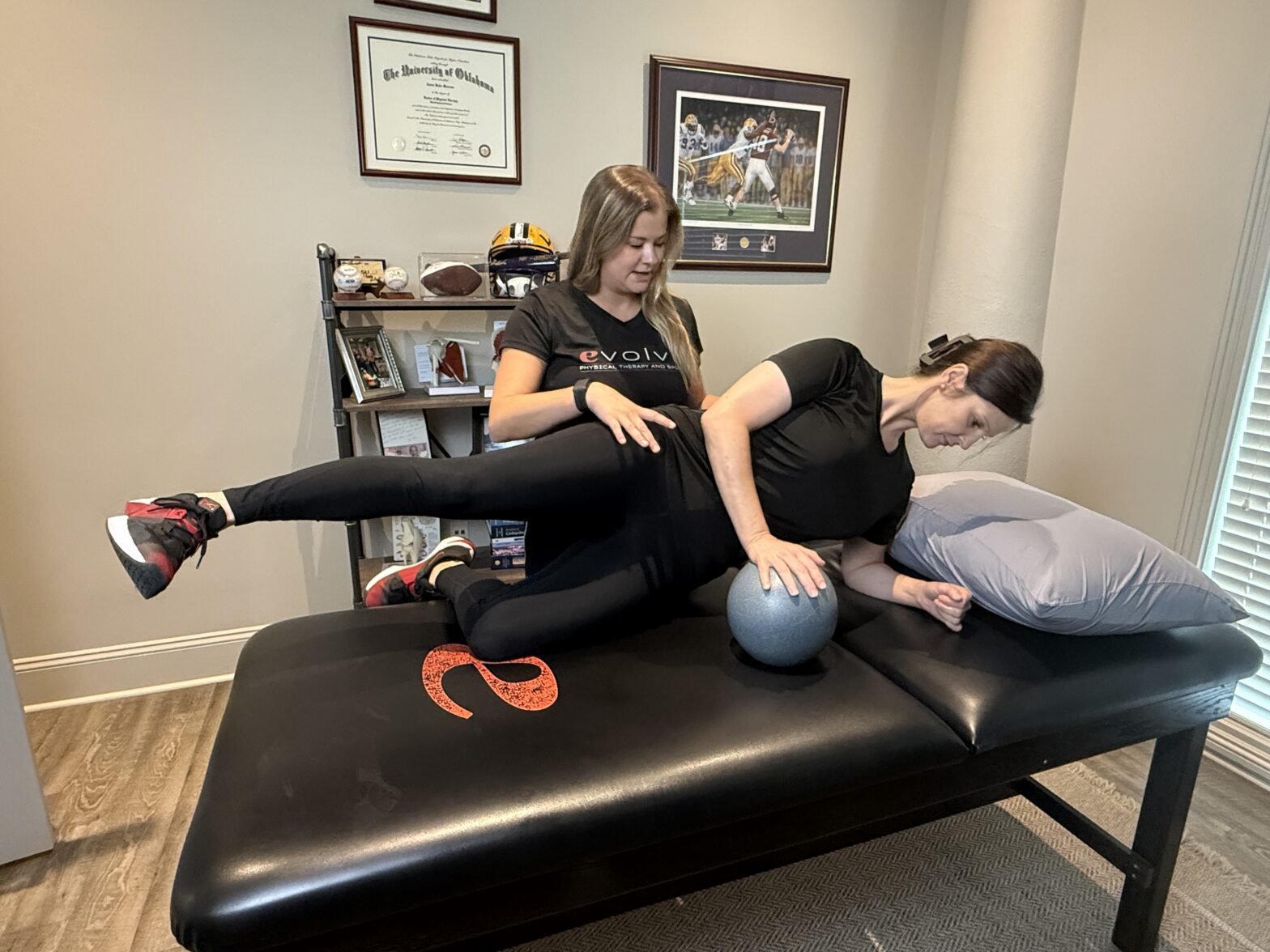
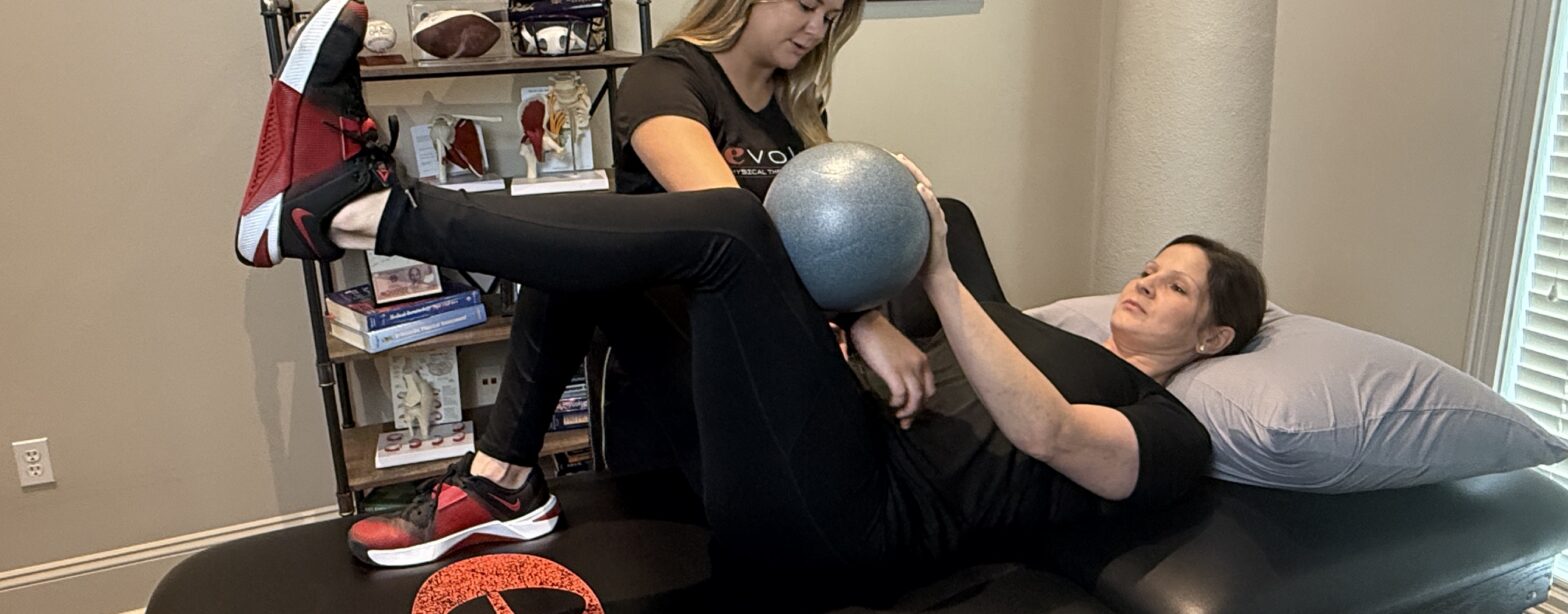
At Evolve Physical Therapy, our Baton Rouge physical therapists perform comprehensive evaluations to better understand your symptoms, movement limitations, muscle coordination, posture, strength, and overall pelvic floor function. Your treatment plan will be customized around your specific needs and recovery goals to help improve muscle control, reduce discomfort, restore strength, and improve daily function.
Pelvic floor physical therapy at Evolve is led by Camille Manning, PT, DPT, a physical therapist with experience in women’s health, manual therapy, and performance-based rehabilitation. Camille’s background in movement assessment and functional rehabilitation helps patients work toward improved comfort, mobility, and long-term pelvic floor function.
Your pelvic floor physical therapy treatment may include:
- Manual or hands-on therapy techniques.
- Pelvic floor muscle retraining.
- Core strengthening exercises.
- Breathing and posture education.
- Mobility and stretching exercises.
- Bladder and bowel habit education.
- Pregnancy and postpartum rehabilitation.
- Movement and body mechanics training.
Our Baton Rouge physical therapists will guide you through each stage of recovery while helping you improve comfort, confidence, and long-term function.
Find Relief With Pelvic Floor Physical Therapy
You do not have to continue living with pelvic pain, bladder leakage, or discomfort during everyday activities.
Contact Evolve Physical Therapy today to schedule your initial appointment and learn how pelvic floor physical therapy can help you feel stronger, more comfortable, and more confident in your daily life.